Skip to content

Events

WHA79: Contaminated Commercial Formula – the need for a global response

Update 19 May, 2026

#WHA79 – 79th World Health Assembly – Geneva, Switzerland, 18-23 May 2026.

130+ countries and territories affected by recalls

Infant formula contamination crisis · Since November 2025 · Source: IBFAN / ibfan.org

+ See the full list of affected countries
Albania
Algeria
Andorra
Argentina
Armenia
Aruba
Australia
Austria
Azerbaijan
Bahrain
Belgium
Benin
Bolivia
Bonaire, Sint Eustatius & Saba
Bosnia & Herzegovina
Brazil
Bulgaria
Burkina Faso
Cambodia
Cameroon
Canada
Central African Republic
Chad
Chile
China
Colombia
Comoros
Congo
Costa Rica
Côte d’Ivoire
Croatia
Curaçao
Cyprus
Czechia
Dem. Rep. Congo
Denmark
Djibouti
Dominican Republic
Ecuador
Egypt
El Salvador
Equatorial Guinea
Estonia
Ethiopia
Finland
France
French Polynesia
Gabon
Georgia
Germany
Ghana
Greece
Guatemala
Guinea
Haiti
Honduras
Hong Kong
Hungary
India
Indonesia
Iran
Iraq
Ireland
Israel
Italy
Jordan
Kazakhstan
Kenya
Kuwait
Laos
Latvia
Lebanon
Libya
Lithuania
Luxembourg
Madagascar
Malaysia
Mali
Malta
Mauritania
Mauritius
Mexico
Moldova
Monaco
Mongolia
Montenegro
Morocco
Nepal
Netherlands
New Caledonia
Niger
Nigeria
North Macedonia
Norway
Oman
Pakistan
Panama
Paraguay
Peru
Philippines
Poland
Portugal
Qatar
Romania
Russia
Rwanda
San Marino
Saudi Arabia
Senegal
Serbia
Singapore
Sint Maarten
Slovakia
Slovenia
Somalia
South Africa
Spain
Sudan
Suriname
Sweden
Switzerland
Taiwan
Tajikistan
Togo
Tunisia
Türkiye
Uganda
Ukraine
United Arab Emirates
United Kingdom
United States
Uzbekistan
Vanuatu
Vietnam
Wallis & Futuna
West Bank & Gaza
Yemen

Unprecedented global recall of formula

Contamination with the toxin cereulide has triggered a widespread formula recall affecting Nestlé, Danone, Lactalis and other manufacturers.

130 countries are affected. The recalls cover infant, follow-on, pre-term and specialised formulas.

Last year formula produced by US company ByHeart was contaminated by Clostridium botulinum. 48 infants were reported hospitalized with life-threatening botulism.

This is not an isolated incident. It is a systemic failure.

THE INDUSTRY'S RESPONSE?

Companies have blamed external suppliers, claimed no “proven causal link”, and have described recalls as “voluntary” and taken “out of an abundance of caution.”

Meanwhile, the legal reckoning has begun:

  • Criminal investigations and complaints in France into infant deaths, delayed recalls and lack of transparency.
  • Police investigations in the Czech Republic for endangering health through harmful food.
  • Civil claims for damages in Northern Ireland (United Kingdom).

GUIDELINES HAVE NOT KEPT PACE

WHO and Codex guidance on manufacturing safe preparation of formula (2007, 2008) are inadequate. They do not address the emerging risks associated with new processing technologies and the ingredients that may be contaminated by spore-forming pathogens and bacterial toxins.

A FOOD SYSTEM BUILT ON FRAGILITY

This crisis exposes the dangers of food systems that are dependent on a handful of corporations. In this case, a single ingredient was reportedly sourced from a single supplier and then distributed globally.

Cross-border online promotion has increased dependency on commercial products beyond actual need, allowing products to circulate in countries where they may not be registered and are difficult to trace.

WHA Resolution 78.18 recommends that member states prevent cross-border promotion.

BABIES AND FAMILIES FACE THE GREATEST RISK

In a world where the feeding of babies has become the object of commerce and trade, the consequences of system failures fall hardest on the most vulnerable. Contaminations and recalls trigger widespread fear and anxiety in families around the world.

Families in the Global South and in emergency contexts face the most severe risks — where testing, detection, treatment and access to safe alternatives may be severely limited. These are the families most often forgotten.

A FOOD SYSTEM BUILT ON FRAGILITY

This crisis exposes the dangers of food systems that are dependent on a handful of corporations. In this case, a single ingredient was reportedly sourced from a single supplier and then distributed globally.

Cross-border online promotion has increased dependency on commercial products beyond actual need, allowing products to circulate in countries where they may not be registered and are difficult to trace.

WHA Resolution 78.18 recommends that member states prevent cross-border promotion.

BABIES AND FAMILIES FACE THE GREATEST RISK

In a world where the feeding of babies has become the object of commerce and trade, the consequences of system failures fall hardest on the most vulnerable. Contaminations and recalls trigger widespread fear and anxiety in families around the world.

Families in the Global South and in emergency contexts face the most severe risks — where testing, detection, treatment and access to safe alternatives may be severely limited. These are the families most often forgotten.

Below, see the record of IBFAN’s participation at the 79th World Health Assembly, with updates added throughout the event.

IBFAN will be present once again at the 79th World Health Assembly to cover agenda items that impact on child health. At the end of the week, on Friday, 22nd May, IBFAN, ILCA, Burundi, Panama and Ecuador will be holding a Side Event to address the contamination crisis.

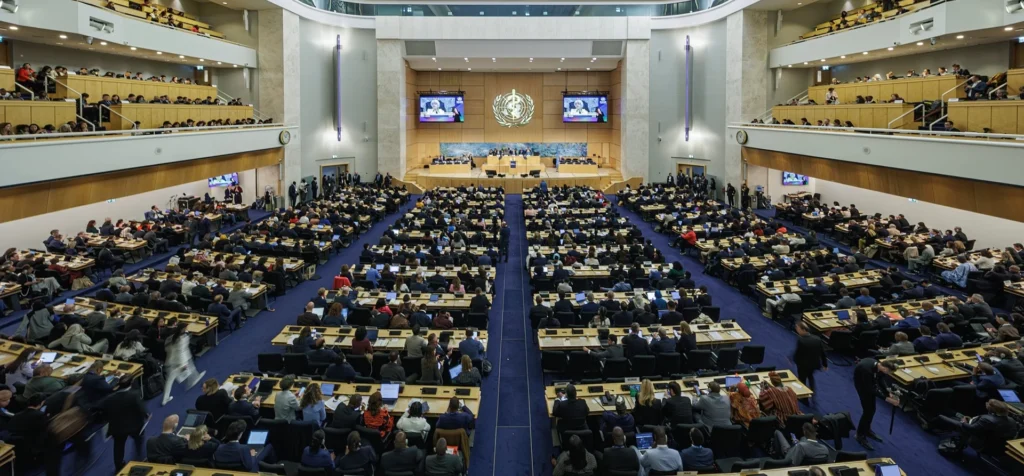
© WHO / Antoine Tardy High-level welcome of the 79th World Health Assembly at the Assembly Hall at Palais des Nations in Geneva, Switzerland, on 18 May 2026.

SIDE EVENT

Contaminated Commercial Formula
– the need for a global response

Over the years misleading marketing and intrinsic contamination of commercial formula – a child’s first taste of ultra-processed products – has led to infant fatalities, factory closures, interrupted supplies and distress to families. The detection of a new type of spore-forming contamination since November 2025 has led to ongoing recalls from over 130 countries, judicial inquiries into infant deaths in France and legal challenges about delays, lack of transparency, fraud and manslaughter.

As global networks, IBFAN and ILCA will focus on the impact this crisis has on all families, especially those in the Global South and in emergency contexts where testing, detection, treatment and safe alternatives may be limited.  Families that are often forgotten.

The event will call on Member States to work towards a more resilient first-food systems, with mandatory independent oversight of manufacturing facilities, with health care systems that warn,  monitor and document health problems during outbreaks.  Full implementation of WHO recommendations and resolutions are essential safeguards for all babies – those who are breastfed and those who are fed formulas.

The online promotion formula (forbidden by  WHA78.18)  creates dependence on commercial products beyond the actual need. Cross border sales exacerbate the inherent safety risks of formula use, allowing products to enter countries where they may not be registered and are difficult to track.  Meanwhile, the baby food industry has passed blame to external suppliers, claimed there is no causal link with their products and that they are acting “out of an abundance of caution.”

This food crisis illustrates the risks of allowing food systems to be dependent on a handful of corporations, with a single global ingredient, sourced from one supplier, causing immense harm.  Alongside speakers from WHO, UNICEF, Parliamentarians and Member States, Yasmine Motarjemi, a food safety expert with a unique experience as head of Food Safety Departments in both WHO and Nestlé, will explain how food systems and food culture needs to change and why whistleblowers need to be heard and protected.

Important links

WHA 79

Side Event

SIDE EVENT 79th WHA

IBFAN, ILCA, Burundi, Panama and Ecuador

Contaminated Commercial Formula – the need for a global response

FIND YOUR NATIONAL LAW on IBFAN’s Website

Click here
Highlights from the Opening Ceremony

MAY 19, 2025

“In Gaza, Sudan, Ukraine and elsewhere, we continue to see attacks on health care, which are becoming a “new normal” of conflict. Last year we verified more than 1500 attacks on health care in 15 countries and territories, killing more than 900 people. In every country, the best medicine is peace, and a political solution. I hope peace will prevail that can transcend generations. War is not the solution. Peace is the solution.”
Dr. Tedros Gebreyesus
Opening address for the 78th WHA

IBFAN Statements

IBFAN is making the following statements at this year’s Assembly:

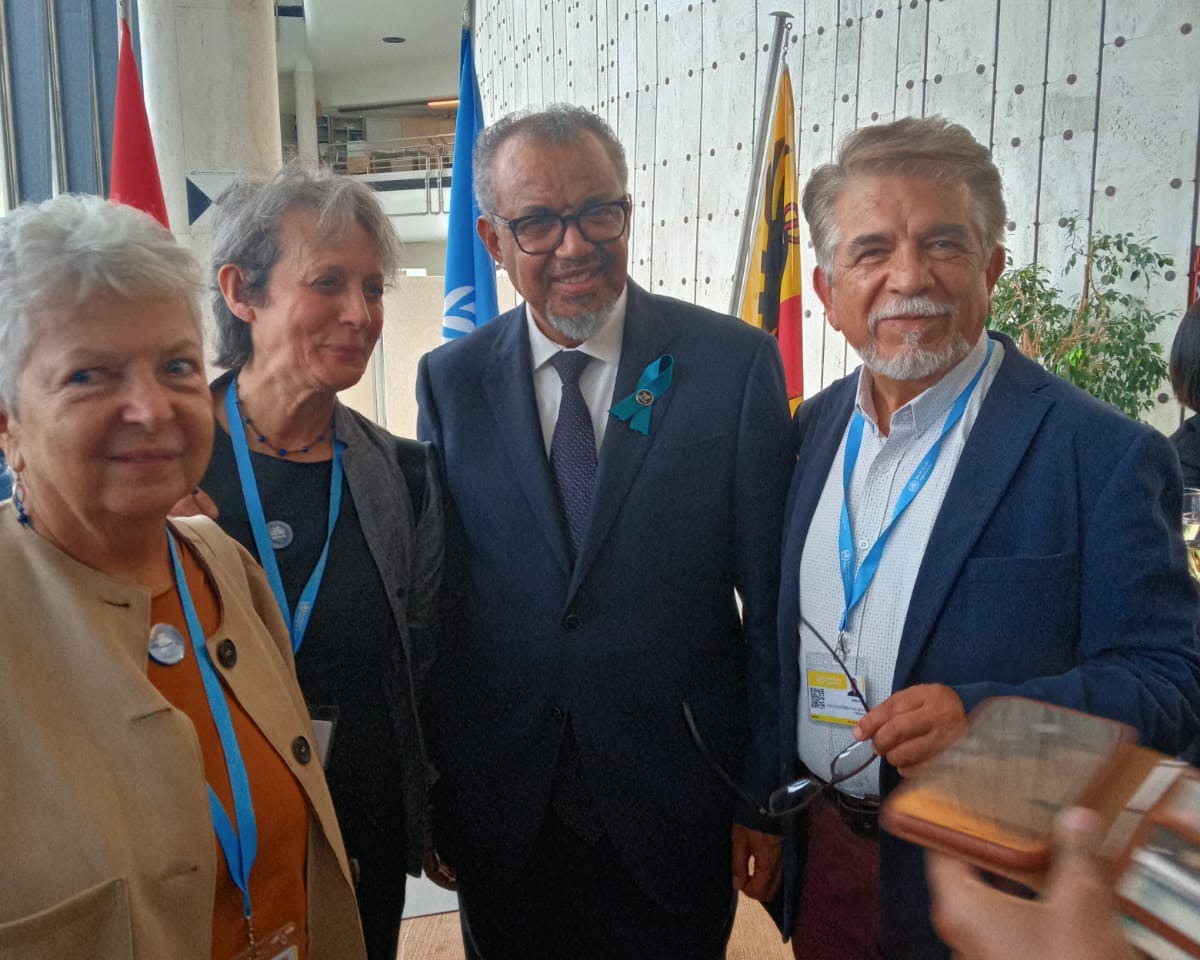
The IBFAN and ILCA delegations present at the 78th World Health Assembly (WHA 78), protecting child health! Zoe Faulkner (ILCA - UK), Paola Gaete (ILCA/IBFAN - Chile), Maryse Arendt (ILCA/IBFAN - Luxembourg), Anna Koronkiewicz-Wiórek (IBFAN - Poland), Patti Rundall (IBFAN - UK), Marcos Arana (IBFAN - Mexico) and Marina Rea (IBFAN - Brazil).
Check below the statements from IBFAN during WHA78:
Item 17.3 - Health conditions in the occupied Palestinian territory, including east Jerusalem
Marcos Arana – IBFAN

IBFAN is convinced that the only vaccine to prevent more deaths in Gaza is to put an end to the impunity of Israel  Dr. Tedros Gebreyesus said this week that attacks on hospitals and health workers are now the ‘new normal.’ IBFAN calls for a Resolution in this Assembly to raise this issue in the UN General Assembly and the Security Council, demanding immediate action to stop these attacks in accordance with the UN Charter and condemning the restriction of water, food and medicine to inflict collective punishment. The protection of the life of mothers and children is a must in any conflict. The denigrating and dangerous current conditions imposed on the people of Gaza also deprives babies of breastfeeding as a lifeline, increasing the already high toll of deaths caused by the bombs and with disastrous long term consequences for survivors. 

Items 12 and 13.1 - Prevention and control of noncommunicable diseases
Patti Rundall

An over-arching principle of the first UN Political Declaration and many WHO guides and Tools, has been the prevention and avoidance of commercial interference in public health policy development.  However, despite the many references to ‘Multi Stakeholder engagement’  Conflicts of Interest safeguards are strangely missing from the report. With the pressure to prioritise economic growth over human and planetary health, Member States face a difficult challenge and must take care to ensure all interactions with private sector entities are transparent, follow independent evidence of risk and are grounded in human rights. If not, IBFAN fears that national NCD actions will be delayed and even derailed. WHO and Member States must also pay attention to Codex and ensure trade policies follow WHO recommendations, especially in relation to baby foods.

With information from Baby Milk Action